
otoplasty • MÁLAGA
A subtle correction can change how the ears relate to the whole face
Otoplasty can change the position, shape or certain proportions of the ears when they stand out too prominently in relation to the face. Planning begins by understanding which anatomical features create that appearance and what needs to be corrected in each individual case.
ANATOMY AND PROPORTION
Not all prominent ears have the same underlying cause
Prominent ears can result from different anatomical features. In some cases, the antihelical fold is not well defined; in others, the conchal bowl may be deeper or project too far. There may also be a combination of these features or significant differences between the two ears.
This is why planning an otoplasty is not simply a matter of bringing the ear closer to the head. The first step is to identify which structure determines its position and shape, then decide what should be adjusted to achieve a more balanced relationship with the face.
ANTIHELIX
When the antihelical fold is poorly defined, the ear may project more than usual.
CONCHAL BOWL
Its depth or orientation may cause the ear to stand further away from the head.
ASYMMETRY
The two ears are not identical and may sometimes require different approaches.

WHAT CAN BE CHANGED
Otoplasty is not about creating a different ear, but a more balanced relationship with the face
Depending on each patient’s anatomy, surgery may address different parts of the ear. The aim is not to impose a standard shape, but to correct the features that make the ears stand out excessively while preserving the natural contours that give them their character.
/01
position
Reducing excessive projection of the ear away from the head.
/02
FOLDS AND SHAPE
Defining or recreating less prominent cartilage structures while preserving soft, natural curves.
/03
PROPORTION
Adjusting features that make the ear appear overly prominent in relation to the face.
/04
ASYMMETRIES
Improving significant differences between the ears while respecting natural asymmetry.
OTOPLASTY AT DIFFERENT STAGES OF LIFE
The same anatomy can be experienced differently at each stage of life
Whether otoplasty is appropriate depends on more than the shape of the ear. Age, development, how each patient feels about that feature and their expectations of surgery all matter.
CHILDREN AND ADOLESCENTS
At a young age, assessment must consider both ear development and the child’s maturity and own feelings about the issue. The decision should not be driven solely by parental concern: the child should also understand the process and want to be involved.
It is important to plan the timing of surgery around school, physical activities and the recovery period.
ADULTS
For adults, otoplasty is often considered when a feature that has been present for years continues to cause discomfort or influences how they wear their hair, appear in photographs or feel about their appearance.
Planning follows the same principle: identify the anatomical feature behind that concern and correct only what is needed to maintain a natural result.
Would you like to know what could be corrected in your case? An assessment can identify the anatomical features that determine the shape or position of your ears and which approach might be suitable.
SURGICAL PLANNING
Good otoplasty begins before surgery
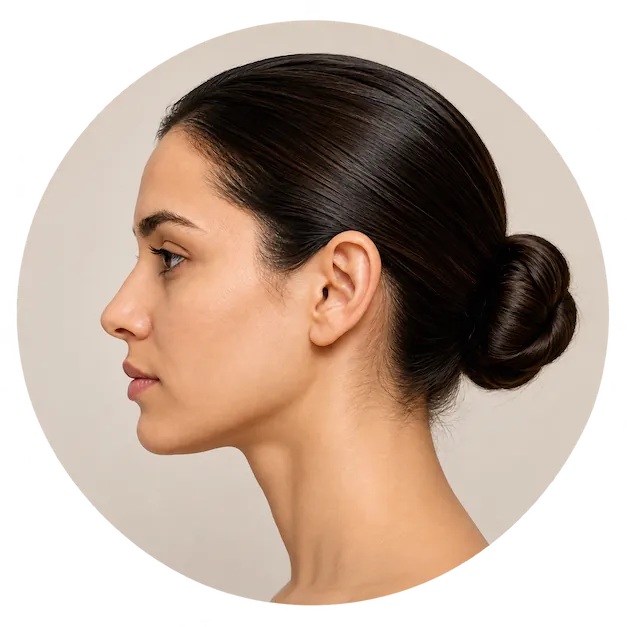
Assessment goes beyond measuring how far the ear stands away from the head. Its shape, contours, conchal projection, definition of the antihelix and relationship between the two ears must all be considered from different angles.
Examining the ears from the front, side and behind helps identify which features truly influence their appearance and which should be preserved. Surgical planning can then be tailored to each patient’s anatomy rather than applying the same correction to everyone.

FRONT VIEW
Shows how prominent the ears appear in the overall facial balance and whether there is a noticeable difference between the two sides.
SIDE VIEW
Helps assess projection from the head and the shape of the cartilage folds.
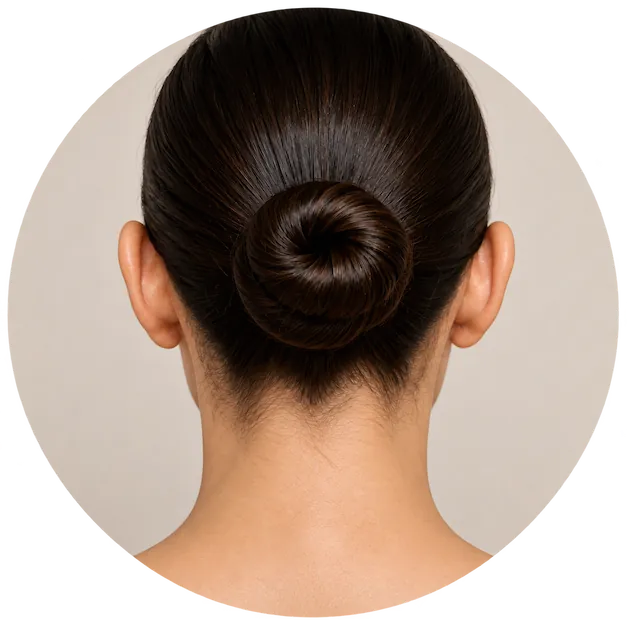
REAR VIEW
Shows the relationship between the conchal bowl and the head, the groove behind the ear and any differences between the two ears.
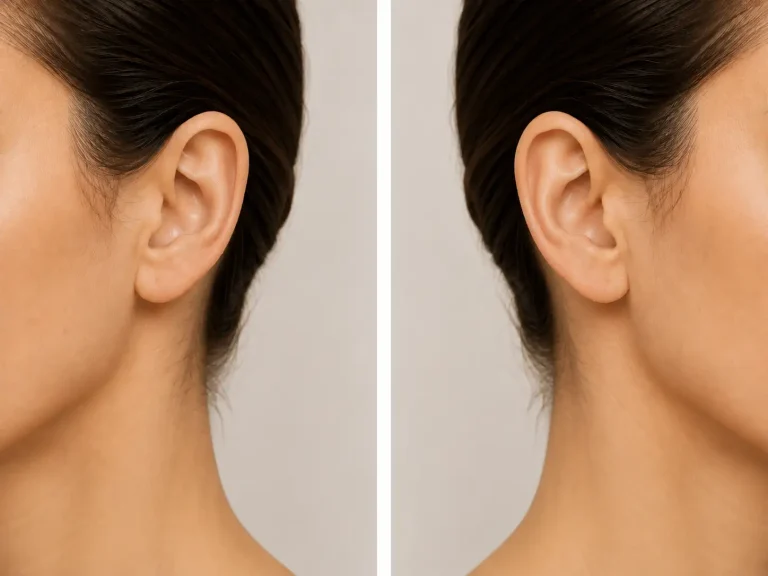
SYMMETRY
The aim is not to make the ears identical, but to improve significant differences while maintaining a natural appearance.
SURGICAL TECHNIQUE
The technique is tailored to what needs correcting
Otoplasty may involve different surgical manoeuvres depending on the shape of the ear, conchal projection, definition of the antihelix and differences between the two sides. No single technique is right for every patient.
Where the antihelical fold needs to be recreated or defined, sutures based on the principles described by Mustardé may be used. These sutures allow the cartilage to be shaped progressively, aiming for gentle curves rather than artificial-looking folds.
In other cases, the conchal bowl may need to be addressed, or different manoeuvres combined, to achieve a more balanced relationship between the ear and the head.
The technique alone does not determine the result; what matters is knowing which structure needs treatment and how much it should be changed.
ANTIHELIX
When the fold is poorly defined, sutures may be used to recreate it by shaping the cartilage while preserving soft curves.
CONCHAL BOWL
When its depth or projection makes the ear stand out, surgical manoeuvres can be used to alter its relationship with the head.
WHEN SEVERAL FACTORS ARE INVOLVED
In some patients, both factors contribute and surgery combines different manoeuvres as part of the same plan.
Mustardé sutures to recreate the antihelix
When the antihelical fold is poorly defined, permanent sutures may be used according to the principles described by Mustardé. These sutures fold and reshape the cartilage to recreate the antihelix without removing it, aiming for a gradual curve and avoiding unnatural-looking angles or folds.
Not every patient needs this technique. Its suitability depends on which structures cause the ear to project and it may be combined with corrections to the conchal bowl when necessary.
scarring
Where will the scar be?
The incision is usually made in the groove behind the ear, where much of it is concealed by the ear’s natural anatomy.
As with any surgical incision, it leaves a scar, and how that scar develops also depends on the individual patient’s healing process. It usually becomes less visible over time.
RECOVERY
Recovery progresses in stages
After surgery, the ear needs a period of protection while swelling subsides and the tissues stabilise. Instructions vary according to the technique used and each patient’s progress, but recovery generally follows several stages.
01
FIRST FEW DAYS
Dressing and initial review to protect the operated area.
02
FIRST FEW WEEKS
Use of a protective headband as advised and a gradual return to normal activities.
03
AROUND TWO WEEKS
Review of healing and removal of skin stitches where appropriate.
04
AFTER TWO WEEKS
Gradual return to sport and activities with a greater risk of pressure or impact on the ears.
results
Good otoplasty should not draw attention to the surgery
The aim is for the ears to sit more harmoniously within the face, reducing the features that previously made them stand out without losing their natural contours.
Correction should respect the individual differences between each ear and avoid an overly pinned-back, rigid or artificial appearance. The goal is balance, not uniformity.
REAL CASES
Results designed to blend in, not stand out
Every otoplasty starts with different anatomy. These cases show corrections to different patterns of projection, shape and asymmetry, each planned individually.
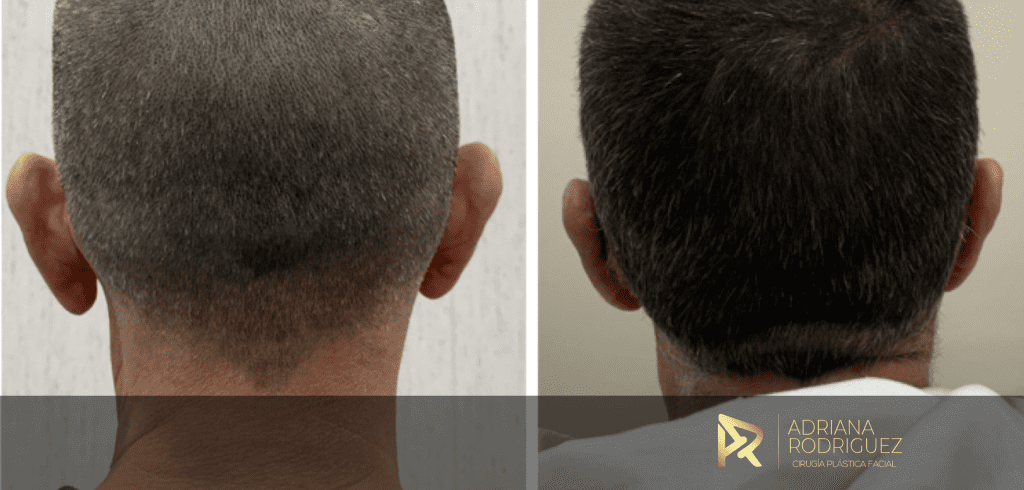
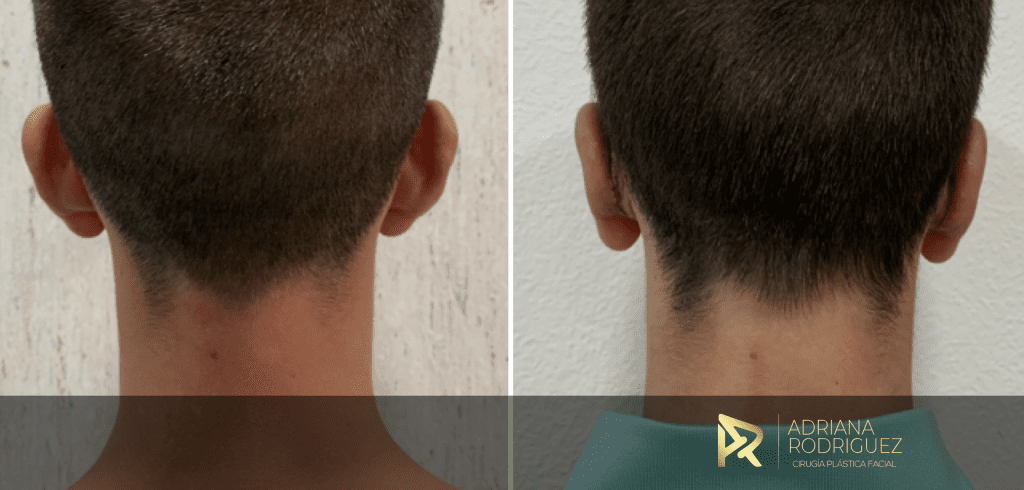
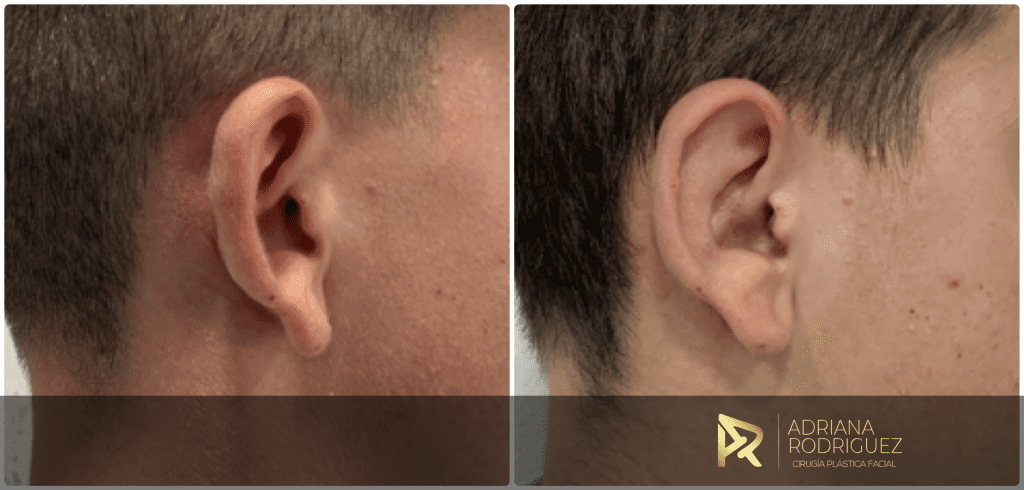
Results vary according to each patient’s anatomy and healing. The images show real patients treated by Dr Adriana Rodríguez.
ESSENTIAL INFORMATION
Frequently asked questions about otoplasty
at what age can otoplasty be performed?
Otoplasty may be considered for children and adolescents as well as adults. For younger patients, it is important to assess not only ear development but also the child’s maturity, their own perception of the issue and whether they understand the process. Each case needs an individual assessment.
can adults also have otoplasty?
Yes. There is no specific upper age limit for otoplasty. In adults, planning follows the same principle: identify the anatomical features responsible for the projection or shape the patient wishes to change, and modify only what is necessary.
where will the scar be?
The incision is usually placed in the groove behind the ear, using the ear’s natural anatomy to keep it as discreet as possible. Like any surgical incision, it leaves a scar, and its appearance over time also depends on how each patient heals.
how long will I need to wear a headband after surgery?
How long the headband is needed depends on the technique used and each patient’s recovery. During the first few weeks, a protective headband may be recommended to prevent pressure or accidental movement of the ears. Specific instructions are given during follow-up.
when can I return to school, work or sport?
A return to everyday activities is usually gradual. Going back to work or school depends on initial healing and the type of activity, while sport and activities involving a risk of pressure or impact to the ears require protection for longer.
is it possible to correct just one ear?
Yes. When the difference is mainly on one side, correction of just one ear may be considered. Both ears still need to be assessed, as the aim is not mathematical symmetry but a more balanced relationship between the ears and the face.
PERSONALISED ASSESSMENT
The next step is to understand your individual case
I can assess your case, or your child’s, at Hospital Quirónsalud Málaga. We will examine the anatomy of the ears, which features affect their shape or position, and which options may be suitable for achieving a natural, proportionate result.
Get in touch
and begin your assessment
We want to understand your needs so that we can offer personalised advice and support, from your first consultation through to recovery. Complete our form and we will get back to you.