
FOREHEAD LIFT • MÁLAGA
The position of the eyebrows changes how the whole eye area is perceived
When the eyebrows descend, the change affects more than just the forehead. It also alters their relationship with the eyelids, facial expression and the proportions of the upper third of the face. An assessment helps us understand which structures are involved before deciding whether surgery may be appropriate.
THE UPPER THIRD OF THE FACE
The forehead, eyebrows and eyelids work together
The position of the eyebrows influences the appearance of the forehead and upper eyelids. When the eyebrows descend, they can make the eyes look heavier and alter the balance of the upper third of the face.
But not every change in this area has the same cause. In some cases, eyebrow descent is the main factor; in others, it is excess upper-eyelid skin, forehead muscle activity or a combination of factors.
This is why an assessment should not focus solely on how much to raise an eyebrow. It should also consider its position, its relationship with the upper eyelid, forehead muscles and facial proportions before determining which treatment may be appropriate.
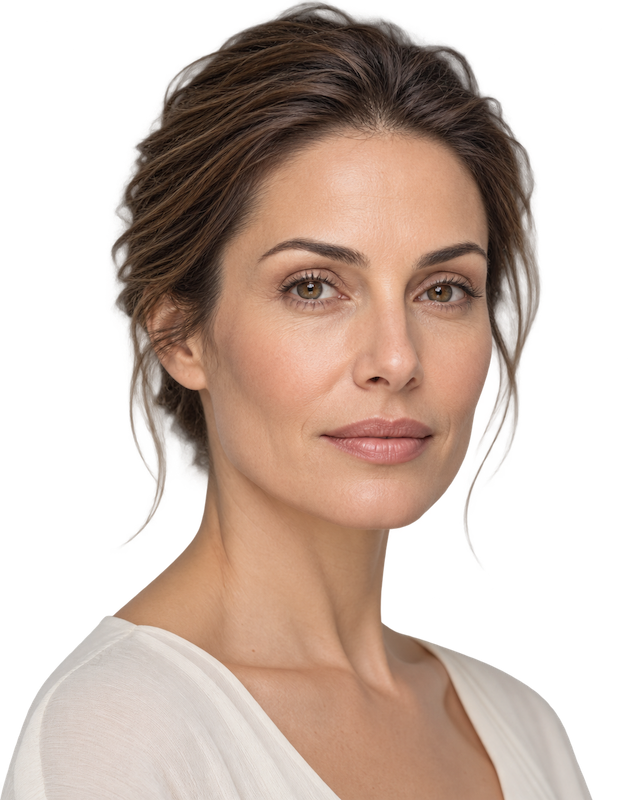
EYEBROW POSITION
Its height, shape and relationship with the orbital rim influence the expression of the upper face.
UPPER EYELID
The appearance of excess skin may be related to the eyelid itself, the position of the eyebrow or both.
FOREHEAD MUSCLES
The activity of the forehead and frown muscles contributes to facial expression and the development of certain lines.

CHANGES IN THE UPPER FACE
A heavier-looking eye area can have different causes
Over time, a heavier appearance around the eyes does not always arise from a single structure. Eyebrow position, upper-eyelid skin, forehead muscle activity and the descent of soft tissues can each play a different role.
/01
eyebrow descent
When an eyebrow loses height or changes position, it can make the upper eyelid appear heavier and alter facial expression.
/02
CHANGES IN THE UPPER EYELID
Excess skin or eyelid laxity can make the eyes appear less open. Its relationship with eyebrow position needs to be assessed as a whole.
/03
MUSCLE ACTIVITY
Repeated contraction of the forehead and frown muscles contributes to expression lines and can influence movement in the upper face.
/04
SOFT-TISSUE DESCENT
With ageing, soft tissues can lose support, gradually changing the position of the forehead and eyebrows.
Identifying the main contributing factor matters, because these changes are not all treated in the same way. Sometimes it is enough to address one particular structure; in other cases, several areas need to be considered together.
UPPER-FACE ASSESSMENT
Before deciding what to treat, we need to understand what is changing the balance
Assessing whether a forehead lift is appropriate involves more than measuring how far an eyebrow has descended. It also means examining the relationship between the forehead, eyebrow position, upper eyelids and the muscles involved in facial expression.
For some patients, the feeling of heaviness around the eyes is mainly linked to eyebrow position. For others, the eyelids play a greater role, or both factors are involved.
The examination helps identify which structure has the greatest influence on the appearance of the upper face and whether it makes sense to treat the forehead, eyebrows, eyelids or several areas together.
EYEBROW POSITION AND SHAPE
Its height, contour and relationship with the orbital rim and upper eyelid are assessed.
RELATIONSHIP WITH THE EYELID
This helps distinguish how much of the heavier appearance comes from the eyebrow and how much from the eyelid itself.
MUSCLE DYNAMICS
Forehead and frown muscle activity helps explain how the upper face moves and which forces contribute to expression.
If you would like to understand what is affecting your upper face and which options might be appropriate for you, a consultation allows us to assess the area as a whole.
SURGICAL TREATMENT
Repositioning tissues without making lifting the goal in itself
A forehead lift, or frontoplasty, is an operation on the upper third of the face designed to reposition the eyebrows and forehead tissues when their descent affects their relationship with the eyelids and facial expression.
When an assessment confirms that eyebrow or forehead tissue descent plays a significant role, a forehead lift may be considered as part of upper-face treatment.
The endoscopic technique uses small incisions within the scalp to access the forehead tissue planes, release selected structures and reposition tissues where appropriate.
The aim is not to raise the eyebrows arbitrarily, but to restore a more balanced relationship between the forehead, eyebrows and eyelids, while respecting each patient’s anatomy and natural expression.
Access
The endoscopic technique provides access to the forehead tissue planes through small incisions within the scalp.
Release
The structures that need to be adjusted are addressed to allow tissue repositioning according to each patient’s anatomy.
Repositioning
The final position is determined by the anatomy, expression and relationship between the eyebrows, forehead and eyelids.
NATURAL APPEARANCE AND EXPRESSION
A higher eyebrow is not necessarily a better-positioned eyebrow
Eyebrow position cannot be judged in isolation or against a standard measurement. Its height, shape and relationship with the eyelid and forehead all contribute to each person’s expression.
For this reason, planning a forehead lift is not about recreating an ideal eyebrow or changing every face in the same way. The aim is to identify changes that may improve the balance of the upper face without losing the features that make each person recognisable.
Symmetry must also be considered within this individual anatomy. Small differences between the two sides are common, and planning aims for greater balance rather than mathematical symmetry.
RECOVERY AND FOLLOW-UP
Recovery of the upper face is gradual
After a forehead lift, swelling, a feeling of tightness and temporary changes in sensation across the forehead or scalp may occur. Their severity and duration depend on the technique used, the extent of surgery and each patient’s response.
In the early stages, tissues need time to settle into their new position. The appearance of the upper face should therefore not be judged solely on the first few days.
Follow-up appointments allow healing to be monitored, eyebrow position to be assessed and aftercare recommendations to be adjusted throughout recovery.
01
FIRST FEW DAYS
The priority is to protect the treated area, manage swelling and follow the local aftercare instructions.
02
GRADUAL RECOVERY
Swelling gradually subsides as the tissues settle into their new position.
03
FOLLOW-UP
Review appointments allow healing, eyebrow position and the overall recovery of the upper face to be assessed.
ESSENTIAL INFORMATION
Frequently Asked Questions About Forehead Lift Surgery
when might a forehead lift be appropriate?
It may be considered when descending eyebrows or forehead tissues significantly affect the balance of the upper face, and assessment suggests that surgical correction could be beneficial. The decision depends on the anatomy, facial expression and which structure is responsible for the change.
what is the difference between a forehead lift and blepharoplasty?
A forehead lift addresses the forehead and eyebrow position. Blepharoplasty focuses on the eyelids. For some patients, a heavier appearance may be caused mainly by one of these structures; for others, both are involved. They therefore need to be assessed together.
does an endoscopic forehead lift leave visible scars?
The endoscopic technique involves small incisions within the scalp. How visible they become depends on their location, healing and each patient’s hair characteristics.
will everyone have the same eyebrow position after surgery?
No. Planning is tailored to the anatomy, facial expression and relationship between the forehead, eyebrows and eyelids. The aim is not to recreate a standard position, but to achieve a result that suits each face.
when can the results of a forehead lift be assessed?
Recovery is gradual. In the early stages, swelling and temporary changes in position and sensation may occur, so results should not be judged solely in the first few days. Follow-up allows tissue adaptation to be monitored over time.
PERSONALISED ASSESSMENT
The next step is to assess eyebrow position and the balance of the upper face
If you have noticed changes in your eyebrow position or forehead tissues and would like to explore which options may be suitable for you, a consultation allows the upper face to be assessed as a whole and whether surgery is indicated to be established.
Get in touch
and begin your assessment
We would like to understand your needs so that we can provide personalised guidance and support, from your first consultation through to recovery. Complete the form and we will get in touch.
CLINICAL JUDGEMENT AND EVIDENCE
Clinical information informed by experience and scientific evidence
The information on this page draws on clinical experience in upper-face surgery and, where relevant, scientific literature on eyebrow position, forehead ageing, endoscopic techniques and the relationship between forehead lifting and eyelid surgery.